A Kick in the Grass: The 1971 Women’s World Cup
London, England
In the annals of sports history, the 1971 Women’s World Cup stands out not just for the athletic prowess displayed, but for the sheer audacity and rebellious spirit of its players. A time when women were often sidelined in the sporting world, these athletes donned their cleats and took to the pitch, ready to challenge the status quo.
The Unofficial Tournament: A Game of Grit
While FIFA may have turned a blind eye to the women’s game during this era, a group of determined women from various countries decided that they were going to play football, official recognition be darned! The tournament, held in Mexico, was as unofficial as a pop-up speakeasy during Prohibition, but that didn’t stop these athletes from making history.
“We were tired of being told what we could or couldn’t do,” reminisces former player and self-proclaimed captain of chaos, Linda Jenkins. “So, we organized our own World Cup. It was a bit like setting up a secret club, but with more shin guards and fewer snacks.”
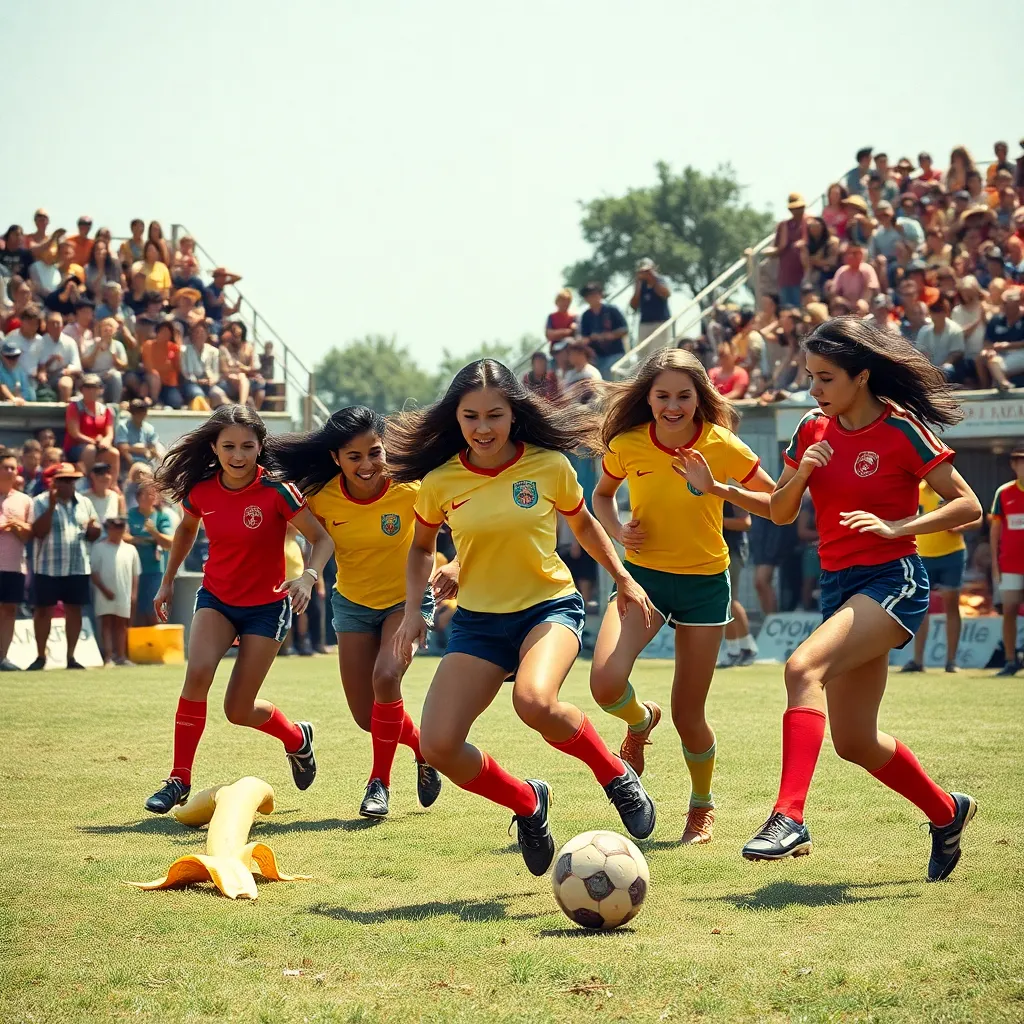
The matches were played at various venues, with makeshift fields that often resembled a patchy backyard more than a professional pitch. But the atmosphere was electric, fueled by the players’ determination and the enthusiastic crowds that showed up to cheer them on.
A Comedy of Errors: The Matches
The matches themselves were a blend of skill, strategy, and what can only be described as comedic chaos. Imagine a game where the referee is more interested in the local taco stand than the offside rule.
“I remember one match where the ball got stuck in a tree,” laughs Jenkins. “We had to stop the game while someone climbed up to retrieve it. Meanwhile, the crowd started a ‘Taco! Taco!’ chant, and I swear it was the most intense moment of my career!”
Players often improvised their techniques, leading to some memorable (and questionable) plays. One player, known only as ‘The Tornado’ for her whirlwind running style, once scored a goal after slipping on a banana peel—something that would make any cartoonist proud.
The Celebrated and Controversial Players
Among the players were women who would go on to become legends, both on and off the field. One standout was Brazilian striker Maria Costa, whose flair for the dramatic was only matched by her ability to score stunning goals. “I wanted to show the world that women could play football with the same passion as men,” she declared, right before executing a dazzling pirouette that left defenders baffled.
However, not all attention was positive. The tournament drew criticism from some high-profile figures. “It’s not real football!” exclaimed one grumpy old coach, shaking his fist like a character straight out of a cartoon. “They should be in the kitchen!” This, of course, only fueled the fire for the players, who took to the pitch with even more determination.
The Legacy: More Than Just a Game
Though the tournament was short-lived and overshadowed by the official men’s World Cup, the impact it had on women’s sports was monumental. It sparked interest across the globe and laid the groundwork for future generations of female athletes.
“We may not have had the shiny trophies or grand stadiums, but we had heart,” says Jenkins. “And that’s what counts. Plus, we had really good tacos.”
Fast forward to today, and the women’s game has exploded in popularity. Players now earn millions, and the sport is celebrated worldwide. Yet, it’s essential to remember the rebellious roots from which it sprang.
The Funny Side of Football: An Unofficial Tribute
As we honor the legacy of the 1971 Women’s World Cup, let us also take a moment to appreciate the funnier side of football. Just like the infamous sketch that impersonated a star of The White Lotus using prosthetic teeth—a move that many claimed was a classic case of ‘punching down’—the world of sports is not without its humorous moments.
Imagine a sketch that depicts those early women footballers, dodging not just opponents but also the judgmental glares of the ‘proper’ sporting world. “Prosthetic teeth would’ve been the least of our worries!” Jenkins chuckles. “We were just trying to keep our socks up and our spirits high!”
In a world where satire reigns supreme, it’s vital not to forget the value of laughter, especially in sports. Whether it’s a player tripping over their own shoelaces or a referee losing track of the score, humor is the glue that binds us together, on and off the pitch.
Conclusion: Women’s Football—A Continued Journey
In conclusion, the 1971 Women’s World Cup was more than just a tournament; it was a statement. A rebellion against norms, filled with laughter, grit, and the occasional banana peel mishap. As we continue to celebrate women’s sports, may we always remember the courageous women who kicked down doors (and occasionally tripped over them) to pave the way for future generations.
So, here’s to the rebels of 1971, and to the taco stands that fueled their dreams. May their legacy inspire the next generation of female athletes to continue challenging the game and, of course, to keep the humor alive.
“Football is not just a game; it’s a way of life,” Jenkins concludes, with a twinkle in her eye. “And sometimes, it’s just about having a good laugh.”