The Colorful Dilemma: When Water Meets Politics in The Hague
A humorous exploration of the colorful waters of the Rio de la Plata, the political drama unfolding in The Hague, and the thirsty data centers, highlighting the interconnectedness of these global issues.
February 7, 2025 · 5 min · 883 words · Lucía Fernández, Diego Silva | Translations:
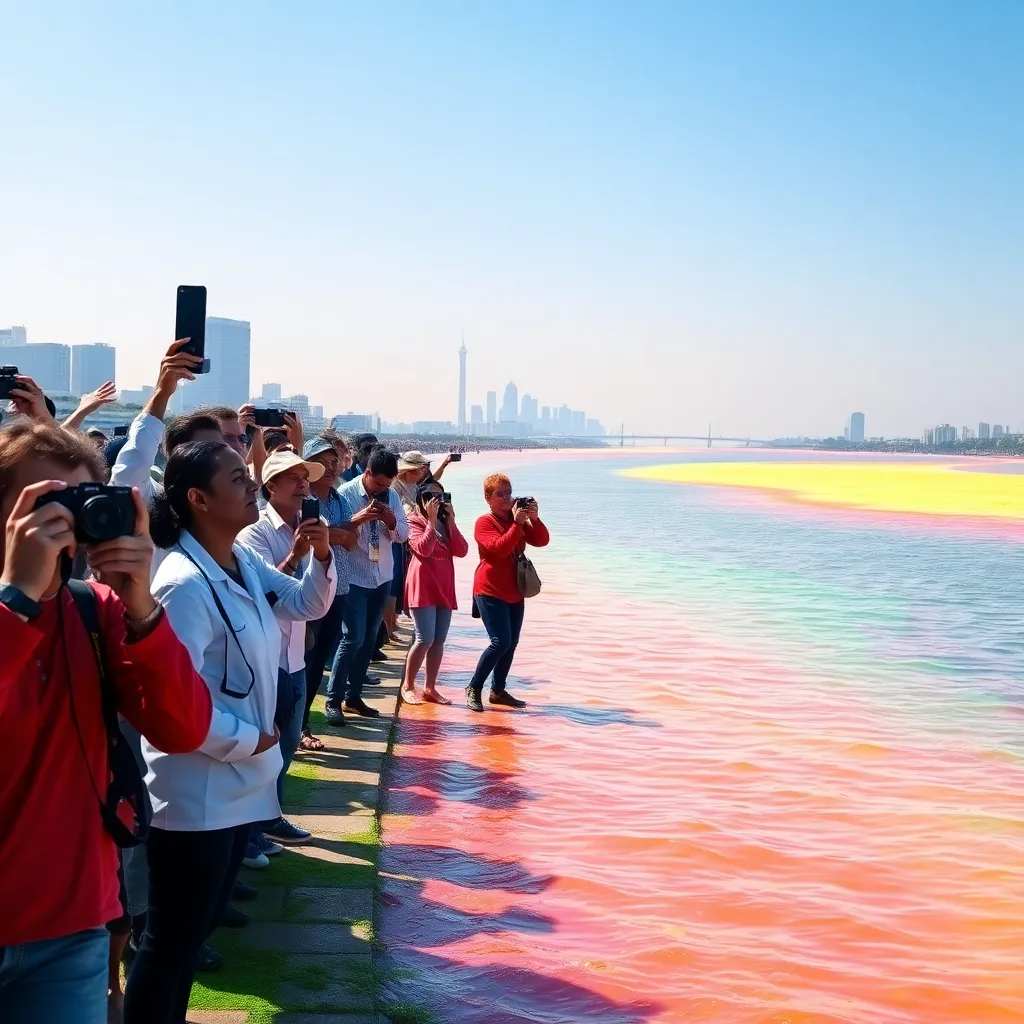
The Mysterious Waters of Rio de la Plata Buenos Aires, Argentina - In a twist more colorful than a five-year-old’s crayon box, the waters of the Rio de la Plata have recently taken on a vibrant hue that has left scientists scratching their heads and social media users reaching for their cameras. The estuary, known for its typically dull brownish tinge, has transformed into a swirling spectacle of neon blues and greens, prompting questions about the environmental implications and the inevitable influx of Instagram posts declaring it the “new Maldives.” What’s Causing the Color Change? While the exact cause of the colorful transformation remains elusive, local authorities are investigating whether the shift is due to pollution, algae blooms, or perhaps just an ambitious art installation gone awry. Environmentalists speculate that the vibrant colors might be the result of nutrient run-off from agriculture, mixed with some questionable discharge from nearby factories, creating a cocktail that would make any bartender proud. “This is a wake-up call for us to take environmental concerns seriously,” said local biologist Dr. Mariana Lopez. “Or at the very least, to make sure our selfies look good!” ### The Hague’s Controversial Moral High Ground Meanwhile, thousands of kilometers away, a different kind of spectacle is unfolding in The Hague, where a certain international body has managed to create what the White House has dubbed a “shameful moral equivalency” between Hamas and Israel. This political drama has taken center stage, attracting the attention of diplomats, politicians, and anyone with a penchant for drama. The debate over the legitimacy of the claims made by the Hague-based body has spurred heated discussions, with some arguing that equating the two sides is like comparing apples to… well, very angry oranges. “It’s absurd!” exclaimed political analyst Ahmed Al-Nasr during a lively debate. “Hamas and Israel are both part of the same fruit basket of conflict, but they are not the same fruit! One’s a bitter lemon, while the other is a sweet, albeit confused, pear!” ### The Intersection of Water, Politics, and Film In the midst of this colorful international debate, a film produced by an Israeli-Palestinian group has surfaced, shedding light on the contentious issue of home demolitions by the Israeli army. The film has gained traction and sparked discussions about human rights, displacement, and the fate of families caught in the crossfire. Critics of the film argue that it attempts to paint a one-sided story, while supporters claim it is a necessary narrative that gives voice to the oppressed. One thing is for sure: the film is making waves, and not just in the aesthetic sense like the Rio de la Plata. “I believe storytelling is powerful, and this film is a lighthouse guiding us through the fog of misunderstanding,” said filmmaker Yara Cohen. “Or at least a neon sign pointing to the nearest bar!” ### Data Centers and Their Thirst for Water Adding to this complicated mix is the burgeoning world of data centers, which have become the unsung heroes of our digital age. However, these technological fortresses are not just hungry for data; they are also voracious consumers of water. With the industry’s rapid expansion, questions are being raised about where all this water will come from. “We’re talking about cooling systems that can use enough water to fill a kiddie pool every minute!” exclaimed tech analyst Jorge Mendez. “And while the Rio de la Plata may be looking fabulous right now, I don’t think it’s prepared for a data center water party!” The challenge of balancing water needs has prompted discussions about sustainable practices, with some tech giants exploring innovative solutions such as rainwater harvesting and recycled water systems. “We need to be responsible,” urged Mendez. “Otherwise, our data centers will be the only ones having a pool party while the rest of us are left high and dry!” ### The Global Water Crisis: A Call to Action As the water crisis looms on the horizon, it becomes increasingly clear that the colorful waters of the Rio de la Plata, the geopolitical debates in The Hague, and the insatiable thirst of data centers are all interconnected. Experts warn that unless a concerted effort is made to address water management and environmental sustainability, we may soon find ourselves in a situation where the only water left to drink is the colorful concoction flowing through the estuary. “The world is facing a critical moment, and we must act before it’s too late,” concluded Dr. Lopez. “Let’s make sure our environmental policies are as vibrant as the waters of the Rio de la Plata!” ### Conclusion: Painting a New Picture As these various threads weave together, it’s clear that the intersection of politics, environmentalism, and technology is creating a tapestry that is as colorful as it is complex. With every splash of neon blue in the Rio de la Plata, every heated debate in The Hague, and every data center’s quest for cooling solutions, we are reminded that our world is a canvas, and it’s up to us to paint it wisely. So, the next time you see a brightly colored river or hear a political debate that seems as tangled as a bowl of spaghetti, remember: we’re all part of this vibrant mess, and it’s up to us to make it a masterpiece.#