When Portraits Go Wrong: The Distorted Art of Diplomacy and Other Absurdities
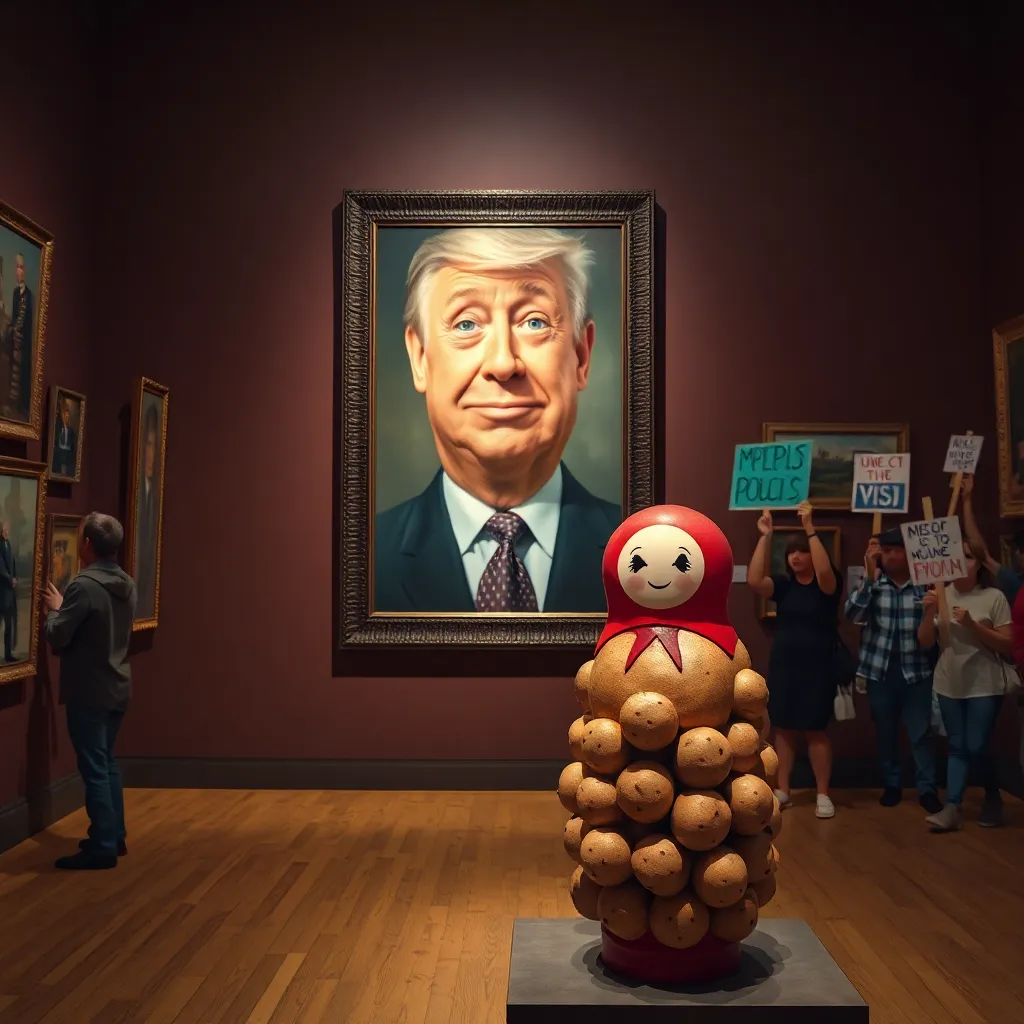
In the Grand Gallery of International Relations, where portraits hang with a proud assurance, one particular piece recently found itself in quite the pickle. A seemingly innocent portrait of the US President was deemed “distorted”—a description that might also apply to some of his foreign relations strategies. The offending artwork was promptly removed after the President expressed his discontent, claiming it was a poor representation of his chiseled features and delightful personality.
A Touching Gift from the East
While the removal of the portrait sent shockwaves through the art community, the President’s spirits were buoyed by a rather unusual diplomatic gift from Russia: a life-sized statue of himself made entirely out of balalaikas. Yes, you read that right. This gift, which resembled a bizarre fusion of a Russian nesting doll and a poor quality bobblehead, was said to have “touched” the President, although some critics argued it was more of a ‘how did this happen?’ moment.
“I think it’s a beautiful tribute, though it does look a bit like a really enthusiastic potato,” remarked one anonymous White House aide, trying to find the silver lining in the bizarre display.
The Art of Complaining
The President, known for his penchant for colorful complaints, has made it clear that he prefers his likeness to be depicted in a more flattering light. “If they’re gonna hang my picture, at least make me look like a Greek god, not some sort of melted candle,” he quipped during a press briefing, much to the amusement of reporters.
Meanwhile, the National Security Council weighed in, with a spokesman confirming that the reported chat about the portrait’s removal “appears to be authentic.” Which raises the question: just how many chats occur about portraits? Is there an art committee that meets weekly, sipping overpriced coffee while critiquing the President’s aesthetics?
Protests and Portraits: A Global Conundrum
As the President’s likeness is debated in the halls of power, protests continue to erupt across the globe, notably in Istanbul. Citizens have gathered for six consecutive nights to voice their discontent over the arrest of Mayor Ekrem Imamoglu. The Mayor, known for his captivating speeches and a smile that could light up a dark room, has become the face of resistance against government oppression. Ironically, while portraits are being removed in the US, in Turkey, they are likely being painted anew—an image of hope and defiance.
The Language of Protest
“We’re not just fighting for a Mayor; we’re fighting for our right to express ourselves!” shouted one protester, waving a handmade sign that read, “We want our portraits and our politicians back!” It’s a bizarre twist that while some leaders are worried about their images, others are fighting for the freedom to express theirs—often through art.
The Elite Creators’ Platform
In a world where art and politics collide, a new player has entered the scene: the ShopMy platform. Marketed to “elite creators,” this innovative platform allows influencers to monetize their links, which raises the question: is this the modern equivalent of commissioning a portrait? Instead of painting a likeness, creators can now paint their financial futures with a click of a button.
Critics have described it as a way for the rich and famous to line their pockets while the rest of us are left wondering how we can get our own portraits (or online earnings) into the limelight. Perhaps one day we’ll see a ShopMy equivalent for political portraits: “Buy a print of the President’s potato statue, profits go to supporting democracy!”
The Sporting Side of Things
Even in the world of sports, where competition is fierce, players are being rated and critiqued. Just ask Thomas Tuchel, who recently took the reins of England’s football team. After his second match against Latvia, fans eagerly awaited player ratings, and social media exploded with opinions—some of which were as distorted as the Presidential portrait. “He played like a hero, but his hair was a tragedy!” exclaimed one user, adding a layer of absurdity to the already eccentric world of sports commentary.
Conclusion: A Distorted Reality
As we navigate this landscape filled with distorted portraits, unexpected gifts, and protests that seem to echo across borders, one thing becomes clear: the absurdity of our world is what makes it fascinating. Whether it’s a President upset over the way he’s depicted, a Mayor being venerated by the people, or creators cashing in on their online presence, we live in a time where art, politics, and personal expression are as tangled as the wires of a balalaika statue.
So, the next time you find yourself staring at a portrait—be it in a gallery or on a social media feed—remember that behind every image lies a story, a complaint, and perhaps a little bit of absurdity waiting to be uncovered. Who knows? Maybe the next great artwork will be a collaborative effort between a discontented politician and a passionate protester, resulting in a masterpiece that truly represents the chaos of our times.