The Great Global Bake-Off: Flour, Fences, and Fractured Agreements
In a world increasingly defined by its bizarre headlines, we find ourselves in the midst of an absurd showdown between humanitarian aid, international diplomacy, and the ever-present specter of bureaucracy.
The Flour Fiasco
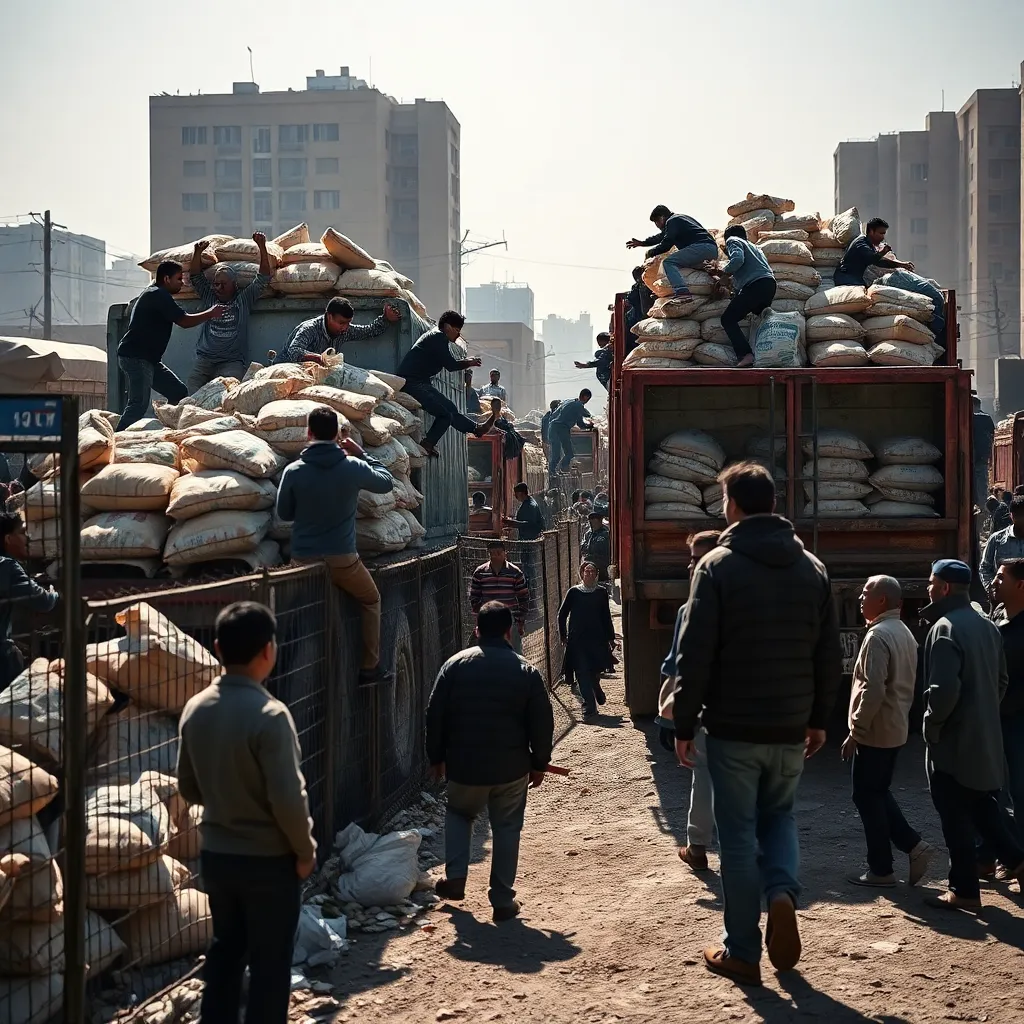
Imagine a scene: lorries filled to the brim with flour are parked near aid distribution sites, ready to help those in desperate need. But hold your horses! In a twist that could only come from a scriptwriter on an extended coffee break, at least 31 people reportedly lost their lives near these very lorries. Was it a flour avalanche? A rogue baking competition gone wrong? Or merely a case of miscommunication in a world where aid is as volatile as a soufflé?
Witnesses claimed that chaos erupted as people, perhaps inspired by their favorite cooking shows, scrambled over fences in a frantic bid to secure their share of the flour. One bystander, who asked to remain anonymous, recounted, “It was like Black Friday but with flour instead of flat-screen TVs!” Talk about a recipe for disaster.
Climbing Fences for Flour
The footage that surfaced from this tragic incident showed Palestinians climbing over fences, not for a game of tag but to grab humanitarian aid. It’s a surreal picture of desperation painted against the backdrop of international neglect and conflict. As they raced towards the lorries, one couldn’t help but ponder: Is this what the world has come to?
In a world where the U.N. holds meetings over the most intricate diplomatic crises, the sight of people risking their lives for a bag of flour serves as a poignant reminder of the priorities we’ve set. Perhaps a new reality show, “Desperate Bakes,” is on the horizon?
The Diplomatic Dough
While people are scaling fences for flour, the world’s leaders are embroiled in discussions that seem as dry as last week’s bread. Over in Europe, talks between Spain and Gibraltar have been ongoing since Britain decided to leave the EU – a decision that still feels like the aftermath of a particularly messy breakup. What’s on the table this time? New rules governing the border, of course! Because nothing spells relief like good old bureaucratic red tape.
In the meantime, Chancellor Rachel Reeves is unveiling plans for spending that could, quite frankly, fund a small country—or a very extravagant bake sale. One can only imagine the spreadsheets involved, each cell filled with numbers that make less sense than a soufflé recipe during a tornado.
Trade Tensions and Flour Wars
Not to be outdone, the world’s two largest economies have decided to join the fray, agreeing in principle to a framework for de-escalating trade tensions. It’s almost as if they realized that while they argue about tariffs, people are literally fighting over flour. Maybe they’ll find a way to bake their way to peace?
Imagine President X and President Y attending culinary classes together, learning how to make the perfect baguette while discussing trade deals. “If only we could knead our differences away,” one might say, rolling out the dough of diplomacy.
The Body Count and the Human Cost
Meanwhile, on a more somber note, the ongoing violence has left 32 officers injured and six people arrested in clashes surrounding these humanitarian efforts. It’s a harsh reminder that while flour may be the centerpiece of our culinary chaos, the real ingredients are the human lives affected by these conflicts. The juxtaposition of people fighting for basic necessities against the backdrop of international politics is a bitter pill to swallow.
The Great Bake-Off Conclusion
So, what does all this mean for our global society? Will we see a new wave of humanitarian efforts that prioritize food and flour distribution over political squabbles? Will we witness the rise of international bake-offs as nations come together to prove who can create the best bread under pressure?
One can only hope that the next time we read a headline involving flour, it will be a joyous one—perhaps announcing the first-ever World Flour Festival, where nations unite not to quarrel, but to celebrate the simple joy of baking. Because if we can’t come together to share a loaf of bread, what hope do we have for peace?
Final Thoughts
In a world where fences separate people from aid and flour becomes a symbol of desperation, it’s clear we need a change. Perhaps we should all take a moment, step back, and consider how we can mix compassion with diplomacy. After all, the best recipes always start with a little bit of love and a dash of understanding.
As we put down our forks and reflect on these pressing issues, let’s raise a toast – preferably with a nice slice of bread – to a world where humanitarian aid is a priority, borders are mere lines on a map, and flour is a unifying ingredient in our shared human experience.