The Unlikely Collision of Politics, Statues, and Job Creation in the UK
London, UK
In a tale that could only be concocted in the whimsical world of British politics, three seemingly unrelated events have collided to create a storyline worthy of a sitcom: a statue restoration, the potential nationalization of a Chinese-owned firm, and the promise of 28,000 new jobs. Buckle up, dear reader; this is going to be a bumpy ride through the absurdity of modern governance!
The Hammer Attack: A Public Outrage
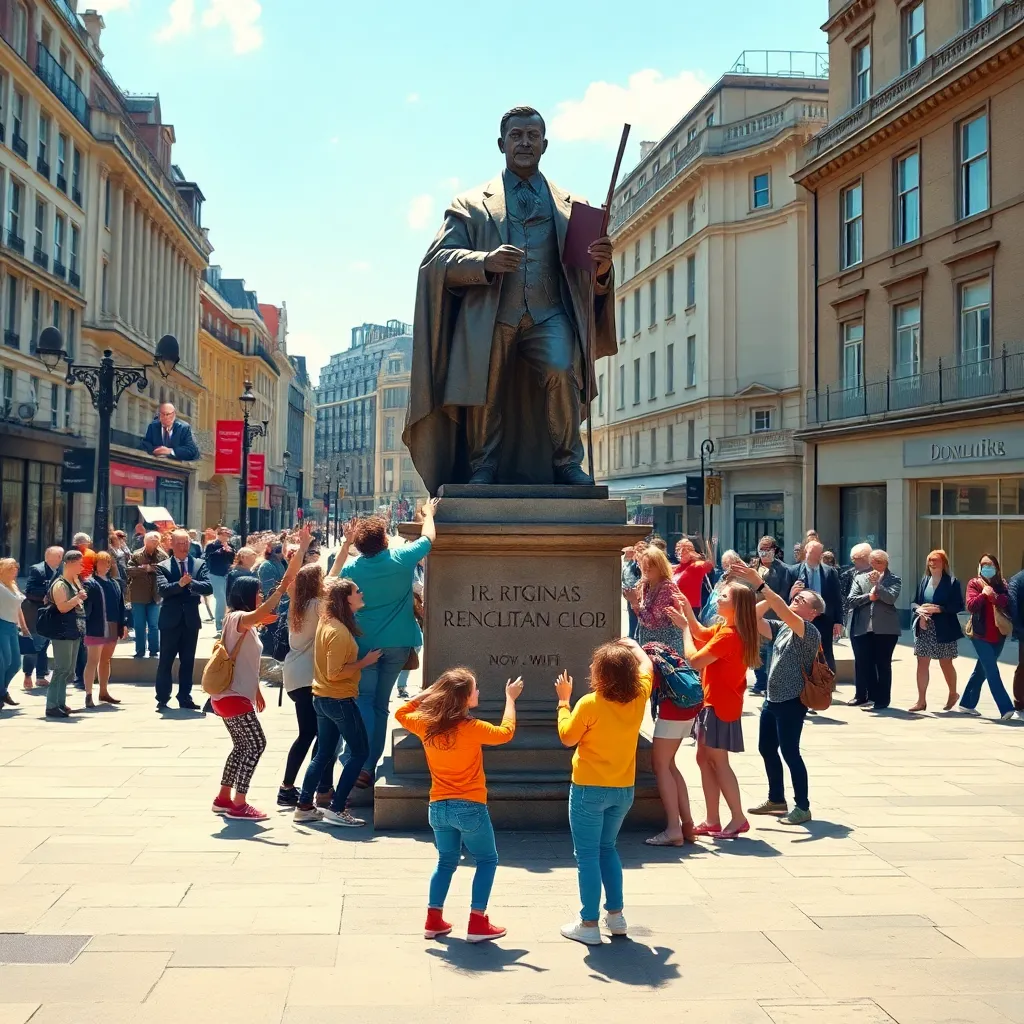
It all kicked off when a member of the public decided that enough was enough and took a hammer to a statue that was, quite frankly, just standing there. The statue in question, a rather bland tribute to Sir Reginald Tumbleworth, a Victorian-era inventor of the underwhelming tea kettle, was left in ruins.
As the dust settled, the public was divided: some applauded the act as a bold statement against antiquated tributes, while others simply mourned the loss of public property. After all, who wouldn’t miss a statue that represented the epitome of British mediocrity?
In an unexpected twist of fate, the statue has since been restored, not by the local council but by a group of enthusiastic art students who saw this as an opportunity to showcase their talents. Rumor has it they even added a modern twist: the kettle now has Wi-Fi capabilities.
Nationalization Nation
Meanwhile, on the political front, the UK government is contemplating nationalizing a Chinese-owned firm that employs a sizeable 2,700 people. The firm, known for producing gadgets that nobody really needs but everyone pretends to love, has become a hot topic in Westminster.
Politicians are torn. Some argue that nationalization would ensure job security and bolster the economy, while others see it as a slippery slope towards a state-run dystopia where tea kettles are rationed and all art must be approved by a government committee.
The idea of a government-run tech firm has sparked a wave of memes across social media. One viral post features a photo of a kettle with the caption, “At least we know it will boil water… eventually!”
The Job Creation Bonanza
In the midst of this chaos, a new site is being proposed that promises to create 28,000 jobs and generate a whopping £50 billion for the economy. The company behind this initiative has assured the public that these jobs will be innovative, engaging, and something the world has never seen before.
Critics, however, are skeptical. “What kind of jobs are we talking about here?” asked local resident Margaret Poppins. “Will I be expected to don a superhero costume and save the world one kettle at a time?”
The company’s spokesperson, sporting a suit that screamed ‘corporate chic,’ attempted to clarify. “These jobs will focus on eco-friendly technology and sustainable practices!” he exclaimed. “And yes, we may need a few kettle saviors on the team!”
Tariff Terrors and Economic Predictions
Adding to the mix, the impact of tariffs looms large over the economic landscape, with experts warning of a potential global trade war. The US president’s political vision revolves around these tariffs, leaving economists clutching their calculators in despair.
As the debate rages on, the BBC’s Cost of Living Correspondent has taken to the streets, armed with a microphone and a questionable sense of humor, to answer public questions about how these tariffs might impact everyday life.
“Will I have to start selling my kidney to afford a loaf of bread?” asked one anxious citizen. The correspondent chuckled nervously, replying, “Let’s just say, bread may soon come with a side of sticker shock!”
The Ukrainian Connection
Meanwhile, on the international front, President Zelensky dropped the news that two Ukrainian soldiers were captured while valiantly fighting in the Donetsk region. This sobering update serves as a stark reminder of the seriousness of global affairs amidst the light-hearted chaos back in the UK.
Conclusion: A Tapestry of Absurdity
As the UK grapples with these peculiar events, it becomes evident that life is sometimes stranger than fiction. A statue restoration, the nationalization of a Chinese firm, job creation promises, and the looming threat of tariffs create a tapestry of absurdity that is both entertaining and alarming.
In the end, one can only hope that through the madness, the people of the UK find a way to unite, perhaps over a cup of tea brewed in a newly restored, Wi-Fi enabled kettle. Because if there’s one thing that can bring us all together, it’s a good cup of tea… and maybe a hammer for those statues that just don’t quite cut it anymore.