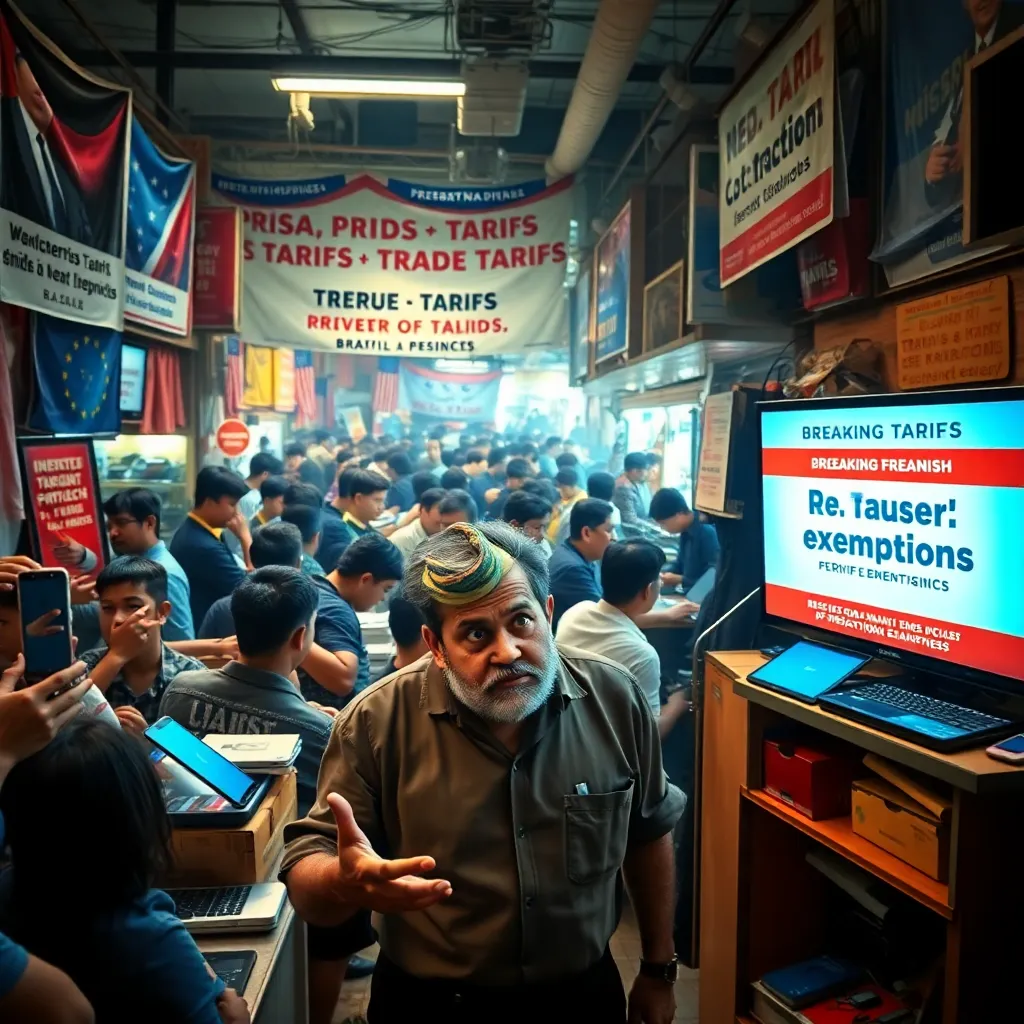
The Great Tariff Tango
London, UK
In a move that has left economists and citizens alike scratching their heads, the Trump administration has orchestrated a stunning about-face by exempting electronics from tariffs just ten days after a chaotic series of trade disputes. This sudden reversal has sparked discussions about the complexities of international trade and the unending drama of political maneuvering.
The Tariff Tango: A Brief History
For those who have been living under a rock—or perhaps under a pile of unshipped electronics—let’s recap. Tariffs on electronics were initially proposed as part of a broader strategy to balance trade deficits, counter unfair practices, and, let’s be honest, make headlines. However, the fallout from these tariffs was immediate and far-reaching, leading to price hikes on everything from smartphones to microwave ovens.
“It felt like we were in a bad reality show,” commented local tech shop owner, Nigel Thompson. “One minute we were planning for a sale, the next we were just trying to survive.”
The Dramatic Turnaround
Just when it seemed like consumer electronics would be the latest victims in a game of geopolitical chess, the administration decided to exempt these products from tariffs. This led to mass confusion among retailers, consumers, and even the tech giants themselves, who were left wondering if they should start producing celebratory ads for the newly tariff-free gadgets or just stockpile them in preparation for the next political upheaval.
Emergency Crews and Households in Flux
Meanwhile, in the quaint town of Worksop, a house was recently destroyed amid this backdrop of economic uncertainty. Emergency crews were dispatched to account for residents, which led to a series of unfortunate events that seemed to echo the chaos of the tariff situation. Local resident, Brenda Knott, described the scene: “It was like something out of a disaster movie. One minute we’re watching the news about tariffs, the next we’re dodging debris from a house that looks like it’s been hit by a missile!”
The Global Stage: Electronics and Diplomacy
As the dust settles from the chaos, the implications of this tariff exemption extend far beyond the shores of the UK. The diplomatic ramifications are palpable, with party leaders such as Sir Ed Davey urging the foreign secretary to summon the Chinese ambassador for an explanation.
“We need clarity,” Davey stated emphatically. “What does this mean for our relations? Are we friends again, or is this just a temporary truce?” The ongoing game of diplomatic chess has become a spectator sport, with citizens eagerly tuning in to see who will make the next move.
The Catastrophic Reality
Adding to the global tension are reports from Zamzam, where locals describe the situation as “extremely catastrophic” after three days of assaults. In a world where electronics are often taken for granted, the plight of those in conflict zones serves as a stark reminder of the fragility of human existence amid the tumult of international relations.
Local Perspectives on Global Issues
As the debate rages on, citizens are left to navigate the absurdity of it all. “It’s hard to concentrate on getting the latest smartphone when you see news about missile strikes or trade wars,” said tech enthusiast and local barista, Sarah Lee. “I just want to enjoy my cappuccino without worrying about the fate of my gadgets!”
Conclusion: The Dance Continues
As the world watches this ongoing tariff tango unfold, one thing is certain: the dance of diplomacy and economics is far from over. With each twist and turn, lives are affected, and the stakes continue to rise. Will electronics remain tariff-free, or is this just a fleeting moment of relief?
As citizens in Worksop, Zamzam, and beyond grapple with the realities of their circumstances, the hope for clarity and stability remains a distant dream. But for now, the spotlight shines brightly on the chaotic, often absurd world of international trade, where the only guarantee is unpredictability.
Let’s just hope the next turn in this dance doesn’t lead to more broken houses—or more broken promises.