When Sports and Politics Collide: The Unlikely Showdown of the Century
In a world where the boundaries between sports and politics continue to blur, it seems we’ve reached a boiling point that can only be described as a spectacle for the ages. Imagine a dramatic semi-final between Spain and France that not only ends with a scoreline resembling a penalty shootout but also sparks a geopolitical debate that leaves everyone questioning who really holds the power: the richest man on earth or the most influential politician?
The Match That Started It All
It all began with the Nations League semi-final match between Spain and France, where fans were glued to their screens, not just for the thrilling football but for the sheer absurdity of the circumstances surrounding it. As the teams battled on the pitch, little did they know they were just pawns in a larger game being played by world leaders.
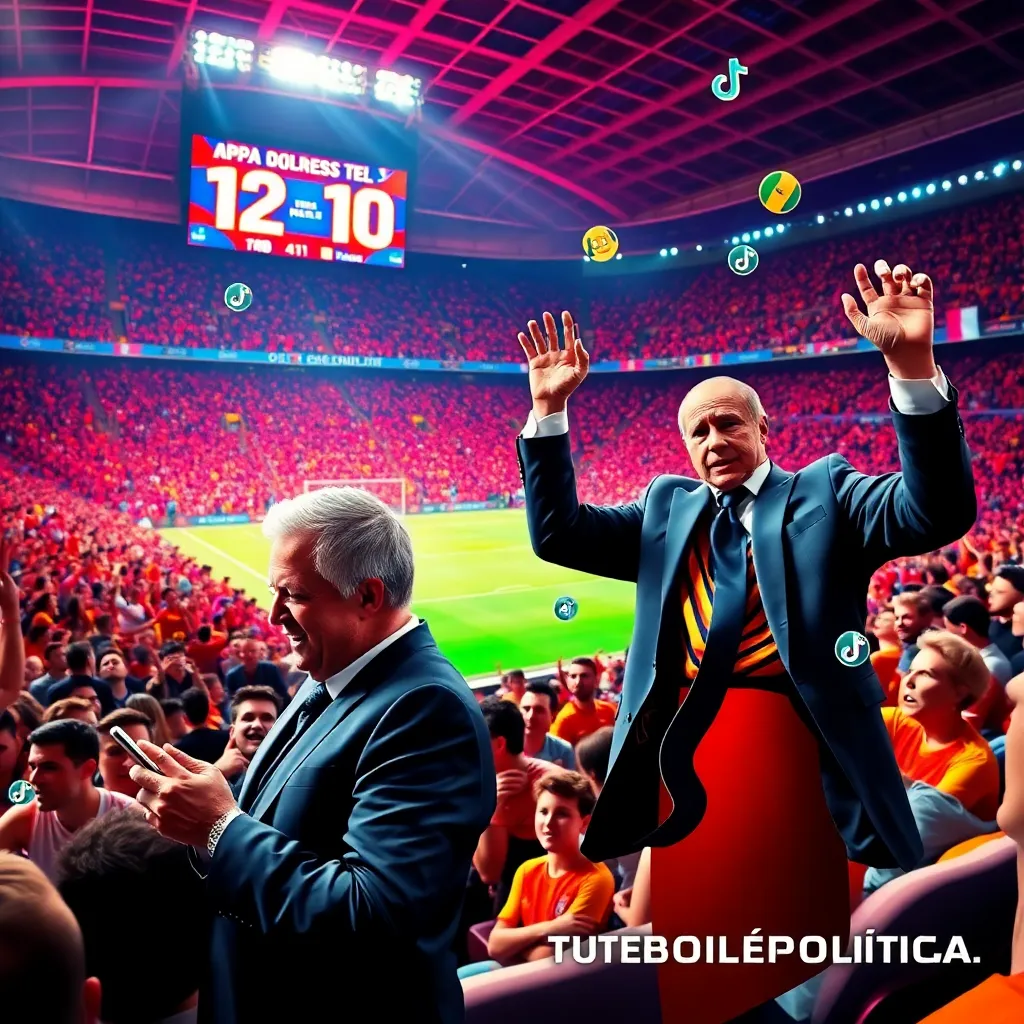
The match ended with a score that looked less like a football game and more like a night out at the arcade. Final score? 12-10. Yes, you read that right. Goals were flying in from every angle, and just when you thought the drama on the field couldn’t get any crazier, the politicians stepped in.
The Richest vs. The Most Powerful
As the dust settled on the football field, it became clear that the real drama was unfolding off the pitch. Enter the world’s richest man, who decided to tweet his thoughts on the match while simultaneously announcing a new venture into sports analytics. His plan? To create an app that not only tracks player performance but also analyzes the political ramifications of every pass. You know, for when you want to understand the geopolitics behind a corner kick.
But not to be outdone, the most powerful politician promptly retaliated with a viral TikTok video, wherein he dances to a remix of the game’s highlights while subtly hinting at his latest proposal to deter Russian aggression. Because nothing says “I’m serious about international relations” like a well-timed dance move, right?
The Social Media Meltdown
Social media erupted. Hashtags like #FootballIsPolitics and #DanceBattleForDiplomacy trended worldwide as memes flooded the internet. A particularly popular one featured a cartoon of the politician doing the Macarena while the richest man analyzed football stats in real-time, with the caption: “When your political strategy is just as unpredictable as a penalty shootout.”
Adding fuel to the fire, the dependable Satirical News Network reported that a prominent UK water company had proposed a plan to reward executives with golden footballs for their performance during the match. This prompted a national outcry and the immediate implementation of new regulations to prevent such ludicrous proposals from going through.
The Players’ Reaction
As the chaos ensued, players from both teams were approached for comment. Spanish striker Alejandro Torres stated, “I just want to score goals, not get wrapped up in international policies. Can we just focus on the game?” Meanwhile, French midfielder Jean Dupont quipped, “If my dribbling could solve world hunger, I’d be a hero by now!”
And so, the players who just wanted to kick a ball found themselves in the middle of a political circus, with pundits analyzing their every move as if they were on the diplomatic stage rather than the football field.
The Global Ripple Effect
In a bizarre twist, this sporting event led to a series of international diplomatic discussions that continued long after the final whistle blew. Countries began to debate whether football should be recognized as an official tool for diplomatic relations. Could a friendly match replace traditional summits? Would politicians trade goals instead of barbs?
New theories emerged, such as “Goal Diplomacy,” where countries would negotiate trade deals based on the outcomes of friendly matches. “If we win, you lower tariffs; if we lose, you send us some of your finest cheese,” was the proposal from one particularly ambitious diplomat.
Conclusion: A New Era of Sports Diplomacy
As we look to the future, it’s clear that the lines between sports, politics, and even water companies have become irrevocably intertwined. The Nations League semi-final might have started off as just another football match, but it has since morphed into a symbol of how absurdly connected our world has become.
So the next time you tune into a match, remember: you’re not just watching athletes; you’re witnessing the unfolding of a strange new era where every goal could impact global relations, and every foul could spark a diplomatic incident. Who knew that the beautiful game could lead to such a chaotic, yet strangely entertaining, political showdown?
In the end, we can only hope that the next Nations League match doesn’t end with a nuclear standoff. But with the world we live in, who knows what the next game will bring?