The Color That Divided a Nation: The Great Debate Over ‘Olo’
London, United Kingdom
In a world where colors are supposed to be straightforward, a new hue has emerged from the depths of artistic imagination, sparking debates that echo through the streets of London, Glasgow, and Edinburgh. Dubbed “Olo,” this blue-green shade has taken the art world by storm and divided the nation into fervent supporters and skeptical critics.
What Exactly is ‘Olo’?
According to a group of avant-garde artists and color theorists, “Olo” is a saturated blue-green that supposedly transcends the mundane palette available at your local paint store. However, skeptics argue that the existence of this color is nothing more than an elaborate hoax, designed to distract us from the pressing issues of the day, such as the ongoing protests over the Supreme Court ruling and the political turmoil surrounding it.
“I saw the color with my own eyes!” exclaimed Jasper Whitmore, a self-proclaimed color enthusiast. “It’s like if turquoise and emerald had a baby while on vacation in the Mediterranean!” But not everyone is convinced.
“It’s just a fancy name for a color that already exists!” shouted Brenda Thistle, an art critic known for her bluntness. “What’s next? A new shade called ‘Pale Beige’ that everyone has been using for decades?”
The Color’s Rise to Fame
The popularity of Olo has surged dramatically, thanks to social media influencers who have taken to platforms like Instagram and TikTok to showcase their Olo-inspired art. Hashtags like #OloChallenge have gone viral, with users attempting to recreate the elusive hue using only household items and a lot of creative interpretation.
However, amidst this artistic chaos, serious discussions have emerged. With social media polls indicating that almost three in five teachers believe that such distractions can negatively affect student behavior, it seems the debate over Olo has seeped into school corridors as well. “We have bigger problems, like teaching kids how to write essays, not what color to call a crayon!” lamented Mrs. Phillips, a history teacher at a London secondary school.
Meanwhile, in the World of Sports
While the nation is divided over its colors, sports fans found solace in the recent victory of Bath over Exeter Chiefs in the Premiership, where Bath clinched a nail-biting 26-24 victory. The stadium was alive with excitement, as fans painted their faces in all shades of blue and green—not Olo, mind you, but the traditional colors of their teams.
“We are the true colors of sport!” roared a Bath supporter, clutching a pint of ale as if it were a trophy. “Forget Olo; we want a color that can win us games!”
Protests Amidst the Palette
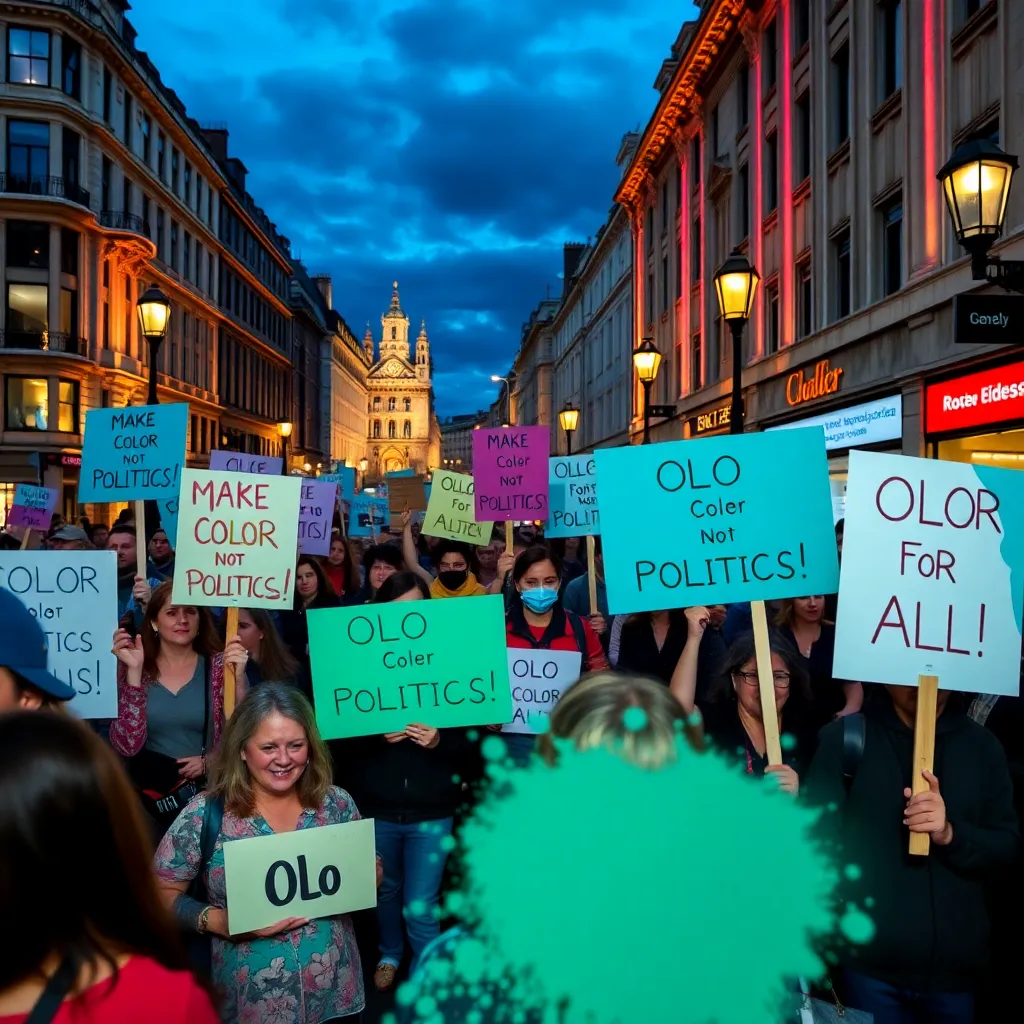
As the Olo debate raged on, the streets of London, Glasgow, and Edinburgh have also become battlegrounds for political protests. Citizens are voicing their concerns over the recent Supreme Court ruling, with demonstrators carrying signs that read, “Make Color Not Politics!” and “Olo for All!” This unexpected melding of art and activism has taken many by surprise.
“We live in a colorful society, but the government keeps trying to paint it gray!” exclaimed protester Fiona MacGregor.
The Art of Negotiation
In a twist of fate, even amidst the chaos of color debates and protests, some Iranian and U.S. officials were spotted discussing high-stakes negotiations regarding a new nuclear deal in a nearby café, where the barista accidentally spilled a bright blue-green drink on the table. “Is that Olo?” one negotiator quipped, breaking the tension.
Perhaps Olo can bring together even the most contentious of parties. After all, nothing says diplomacy like a good discussion about color theory over a spilled drink.
The Future of Olo
As the debate continues, art enthusiasts, teachers, and sports fans alike are eagerly awaiting the next chapter in the saga of Olo. Will it become a mainstream color, or will it fade into obscurity like last year’s trending TikTok dance? Only time will tell.
In the meantime, citizens are encouraged to embrace their own interpretations of Olo. Whether it’s through art, sports, or protesting in the streets, one thing is clear—our world is a canvas, and we are all artists in our own right.
Conclusion
In a society where colors seem to dictate moods and movements, the emergence of Olo has provided a peculiar yet fascinating distraction. It has sparked protests, ignited debates, and even brought a bit of humor to high-stakes negotiations. So, whether you see it as a new color or a clever ruse, let’s remember one thing: we’re all in this together, and perhaps it’s time to celebrate the vibrant palette of life—Olo included.
Join the conversation! What do you think about Olo? Is it a color worth fighting for, or just a fancy name for something we’ve already got?